Kabocha got hurt in the rice-demon fight, so for once the team stops to rest. Kinoko mentions Hakata; they end up across the river in Fuku, the samurai half of a city split down the middle by water. Lord Hiroaki receives them like royalty — tea ceremony, onsen eggs, geisha, yuzu in every dish — and makes very clear what he thinks of Hakata on the far bank: flashy, wasteful, dishonorable, full of men who dance in women's clothes. Fuku is order and tradition. Hakata is neon and noise. The two sides loathe each other and survive on a fragile yuzu-trade truce that is, right now, coming apart.
Eesha, Hiroaki's aide, reports the trouble: shipments sabotaged, prices spiking, merchants swearing there's a monster at the harbor — and the samurai refusing to help because helping is beneath them. Something doesn't add up. Then, each night, drums and lights pull at the team from across the river, and one night they follow a shadow out of Hiroaki's own house into a darkened hall, where the lights rise on a dazzling Hakata revue led by a masked dancer holding a very familiar fan.
The dancer twirls away before they can reach him. The next morning Hiroaki claims to know nothing and sneers at Hakata twice as hard. The yuzu keeps rotting on the docks. And the closer the team looks at the gap between the two halves of this city, the more it seems to run straight through one man.
OPEN THE BEAT SHEET ▼
- 1Arrival and rest: Kabocha is hurt from the rice-demon fight, the first time the team has had to stop and recover. Kinoko floats Sendai or Hakata as restock options; the team picks the nearer samurai district, Fuku, where Lord Hiroaki extends a warm welcome.
- 2Fuku hospitality: Matsu's armor marks him as samurai stock, so the whole team gets treated as honored guests. Tea ceremony, onsen eggs, a geisha performance, yuzu in everything. It's comfortable, formal, and very carefully arranged. Hiroaki gives them the tour and looks down his nose every time Hakata comes up — men dancing in women's dress, he sniffs, dishonorable.
- 3Nightly revels: each evening, drums and neon spill across the river from the Hakata side and disrupt the Fuku household's careful calm. It nags at the team. Kabocha wants to move on and find more seeds; Matsu, feeling a kinship with samurai discipline, initially sides with her and with Fuku.
- 4TURNING POINT — First sighting: a commotion in Hiroaki's own home sends the team chasing a shadow across the river into a darkened building. The lights come up on a full Hakata revue — and a masked dancer in women's kabuki costume, holding a fan they recognize instantly as Hiroaki's. Before they can reach him, he twirls off in a flurry of fans and skirts and is gone.
- 5Denial and blame: confronted the next day, Hiroaki plays oblivious and doubles down on his contempt for Hakata's 'wasteful hedonism.' Meanwhile Eesha reports the yuzu situation is getting worse — shipments sabotaged, prices climbing, merchants talking about a monster. The samurai have refused to send aid because helping is beneath them.
- 6Merchant perspective: following a sympathetic geisha across the river, the team braces for the same hatred they got from Fuku and instead finds people who simply want to live, trade, and enjoy themselves. The merchants show off Hakata's side of yuzu culture, then reveal the harbor guard has tripled since a monster started toppling shipments. They asked Fuku for help. Nobody came.
- 7TURNING POINT — Demon unmasked: cornering the dancer at the revue again, the team watches him transform into the yuzu-seed demon, floral-sour breath wilting whole crates of fruit. Hiroaki admits it outright — he lives two lives, and that's just how it has to be. He won't reconcile them. He's too ashamed, too bound by what the Fuku side would think.
- 8CRISIS — Hard conversation: the team pushes Hiroaki to own both halves of himself. Kabu takes the lead — the exact honest confrontation he dodged back in Episode 4 — and forces the conversation into the open. The demon only falters once Hiroaki actually admits the shame instead of performing around it.
- 9Joint defense: the samurai are finally called across the river, and the two sides recognize their lord at the same moment. Confronted with both halves of himself in one place, Hiroaki can't hold and fully transforms into the demon. Samurai and merchants fight it together; the team subdues it by reminding Hiroaki he's allowed to be both people. Kabu harvests the cursed seed.
- 10TURNING POINT — Resolution: the two districts agree to build a bridge. Then the real twist lands — everyone in Fuku already knew about Hiroaki's double life. They'd said nothing for years to spare him the embarrassment, and that silence is exactly what kept the whole city locked in place. Matsu, who came in siding with Fuku, leaves quietly moved by Hakata's freedom — a crack opening toward his own episode. Ume watches both sides and files away how fact and feeling each build a community's sense of itself.
SUPPORTING CASTHiroaki · Eesha▼
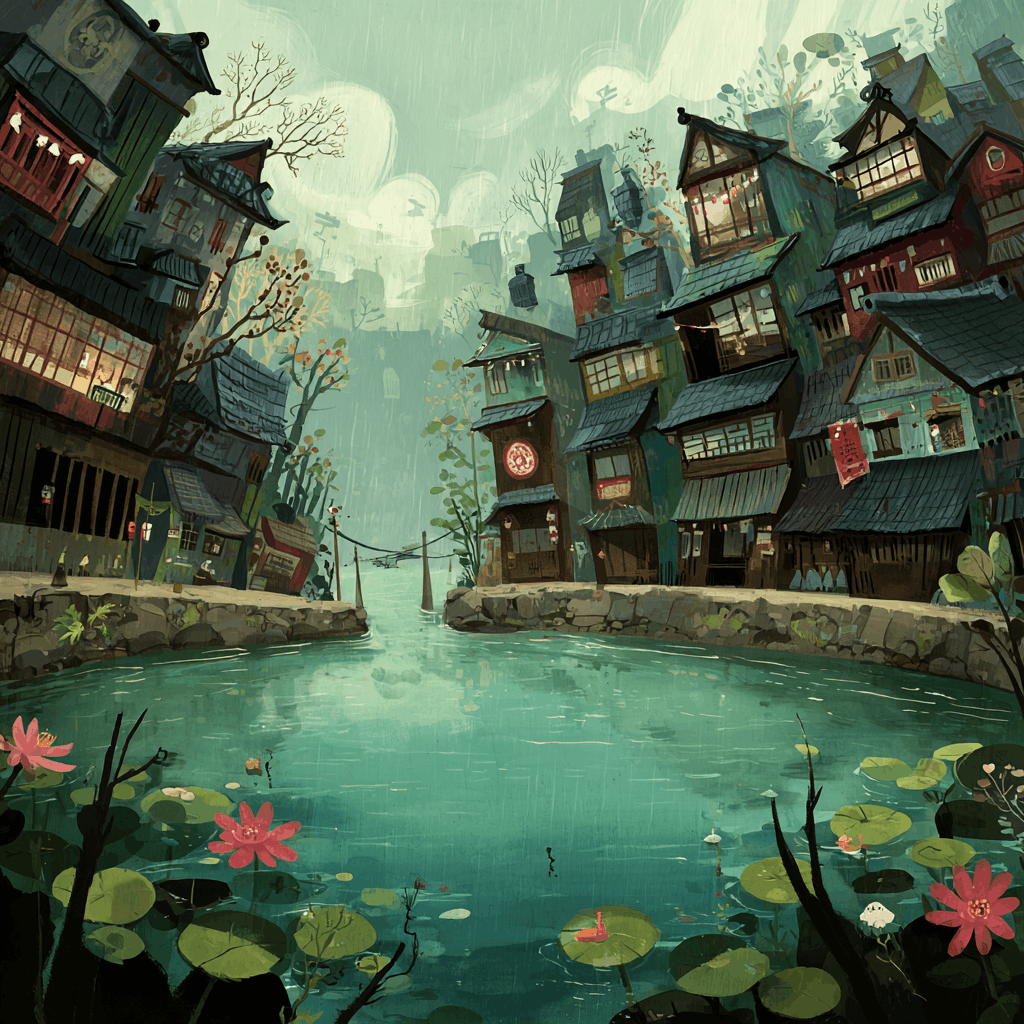
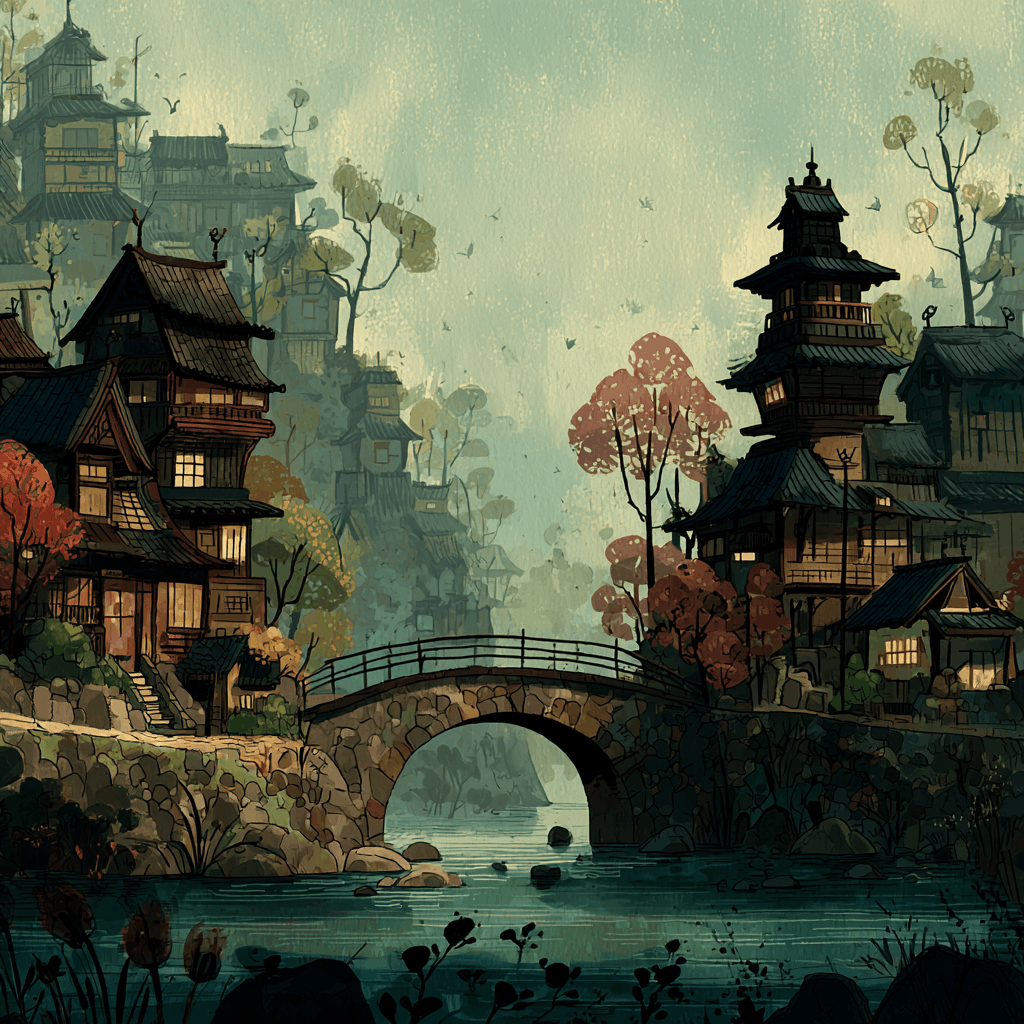
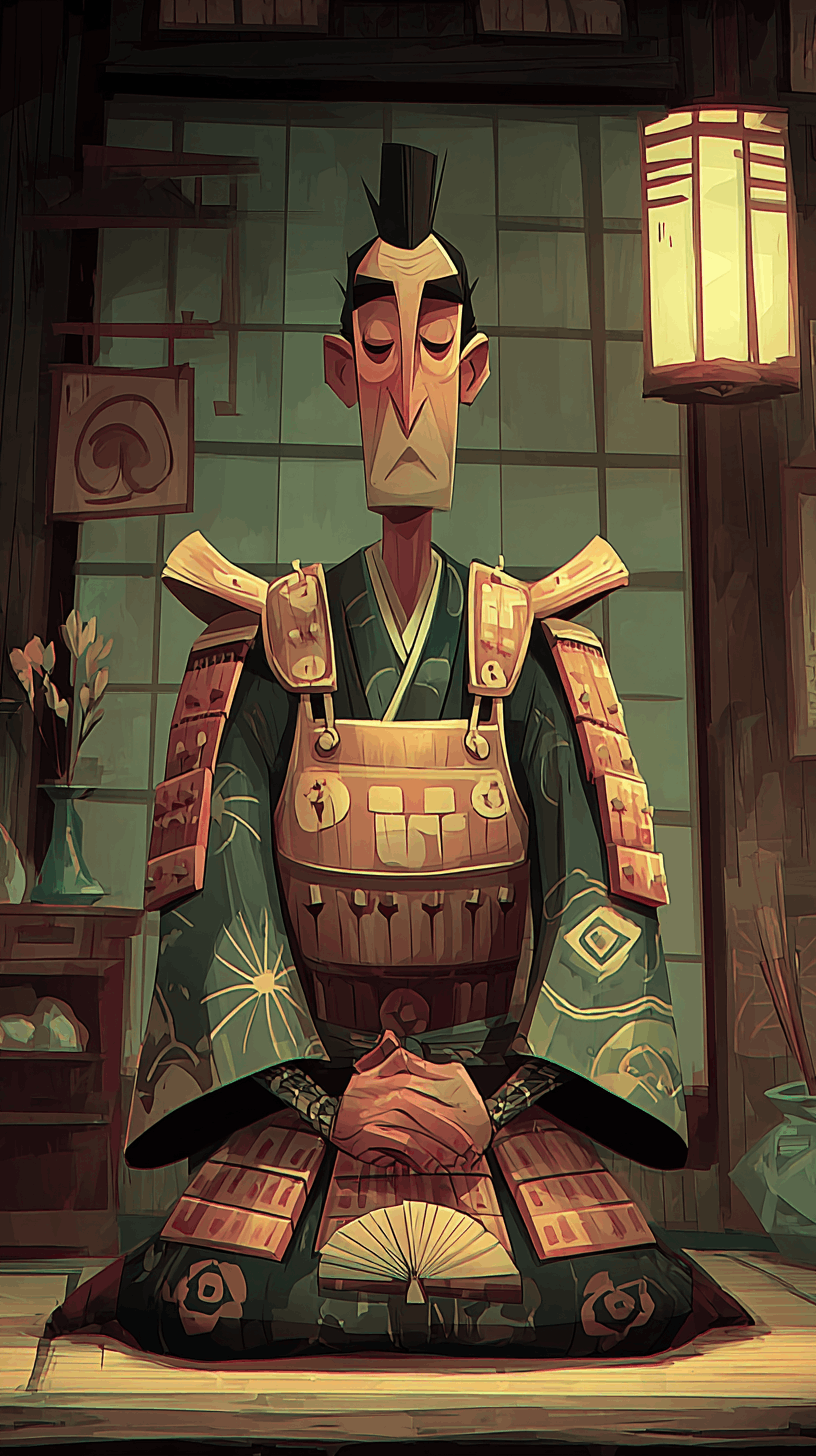
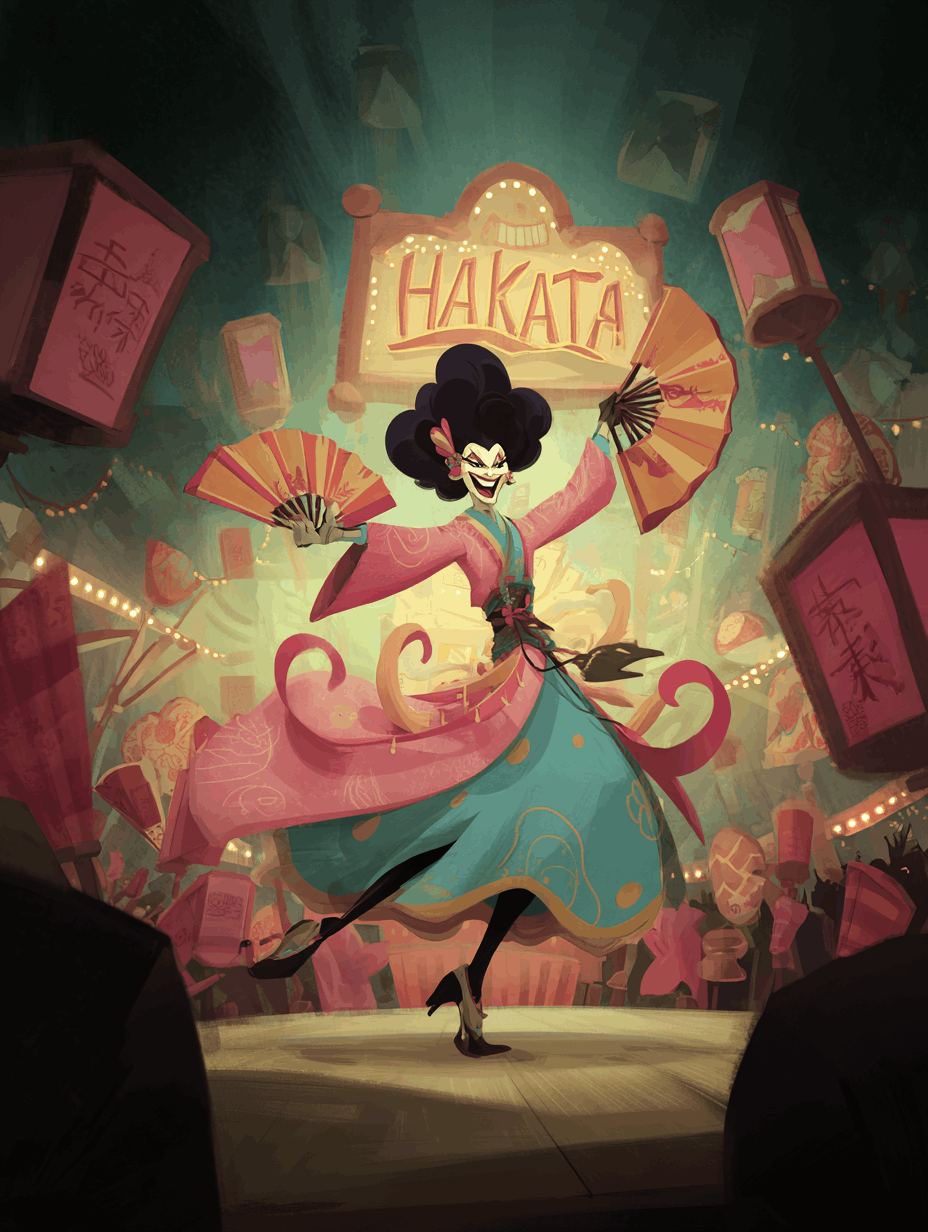
ART DIRECTION — Split composition: left half shows Hiroaki in full samurai regalia, rigid and formal, Futamen castle behind him. Right half shows the Hakata revue in mid-performance — same figure, same face, but transformed: robes, fan, lights. The river runs vertically through the center of the image, splitting the two worlds.
Fukuoka and Hakata are one city that has never fully agreed to be one city. In 1889 the Meiji government merged two neighbors who had spent centuries facing opposite directions: Fukuoka, the samurai castle town, formal and ranked and built around the han lord; and Hakata, the merchant port, older, louder, packed with artisans and open to whoever sailed in. The merger named the combined city Fukuoka. Then it gave the main railway station to Hakata. Your JR ticket still says Hakata today. People from each side still have opinions about how that went.
Hakata had the outward-facing temperament because it had to. As Japan's closest major port to Korea and China, it took in trade, people, and ideas centuries before most of the country, and built festivals and theater around that traffic — the Yamakasa, where teams race enormous floats through the streets, and a deep performing-arts tradition. Fukuoka, on the castle side, kept its back to the water and its eyes on the rulebook.
So the city is a single name stretched over two temperaments that don't quite reconcile: one that performs for the world and one that guards itself from it. Everyone who lives there knows which side they're from. Nobody seems eager to talk about why it still matters.