The team reaches Aokusa, a hillside of interconnected rice-field levees, mid-battle, and stops short at the sight of a boy with a peach for a head. Momotaro, the local hero, is leaping between paddies with a chain-scythe, dodging a massive rice demon. At the moment he looks ready to strike, he throws the scythe into a levee board instead, flooding the field to shove the demon back rather than kill it. The demon escapes. His three companions swarm him with praise and cleanup, and the town, completely unbothered, goes about its day. They have a hero. Why worry?
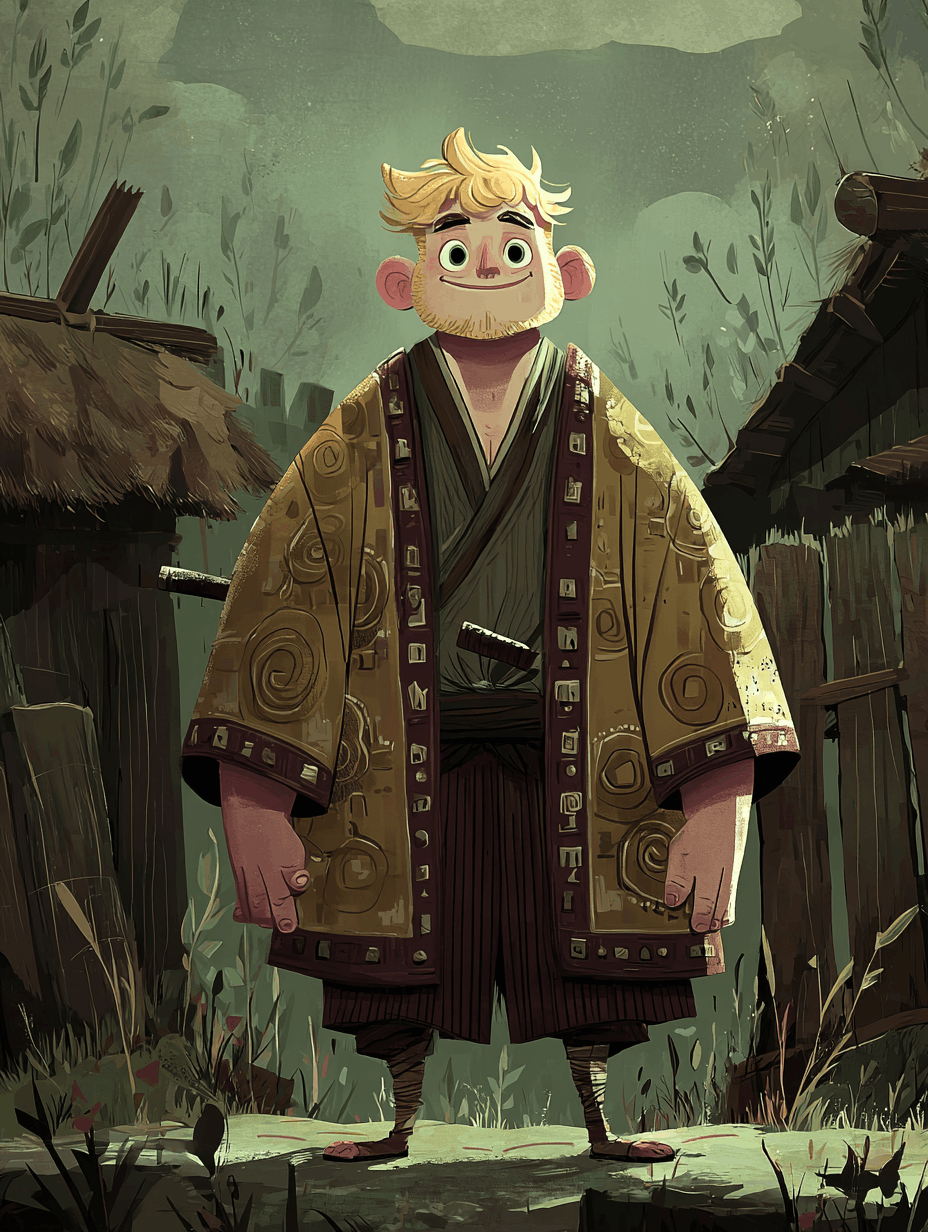
Up close, it's unmistakable: a peach where a turnip should be, the same kind of curse Kabu's carried since Furumi, worn by a boy the town named after the legend Kabu grew up idolizing. Momotaro isn't bothered by any of it. Kabu is bothered by all of it.
Kabu is threatened on sight. When he accuses Momotaro of letting the demon get away, Momo answers easily: 'I wasn't trying to hurt it. Just protect the town.' Two completely different ideas of what a hero is, standing in a rice paddy. Kabu suggests they team up; Momotaro suggests they go help the townspeople instead. Taken literally, that sends the team into a goose chase of errands and interviews while Momo's crew beats them to every attack.
The chores add up to nothing useful, and the team is still late to every attack while singing their way through 'What It Takes to Be a Hero,' both sides arguing a different definition of the word under the same upbeat melody. When the demon strikes a third time, Momotaro's crew can't hold it, and half a hillside of rice goes down with it. Protecting the town without fighting the thing attacking it has a cost, and it's finally visible.
Kabu says the quiet part out loud: demons should be killed. Momotaro asks if he's ever killed one. Kabu hasn't. He says he would. It settles nothing between them, and Momotaro moves ahead with a plan to trap the demon in a levee, crops be damned.
What finally reaches him isn't the argument, it's Kabu dropping it. Sheepish, he tells Momotaro that sacrificing the crops will cost the town long after the demon's gone, and he knows, because it's what he did to his own, which is the real reason he's out here looking for a cure instead of home. Momotaro hears it, and for the first time sees something in Kabu worth fighting alongside.
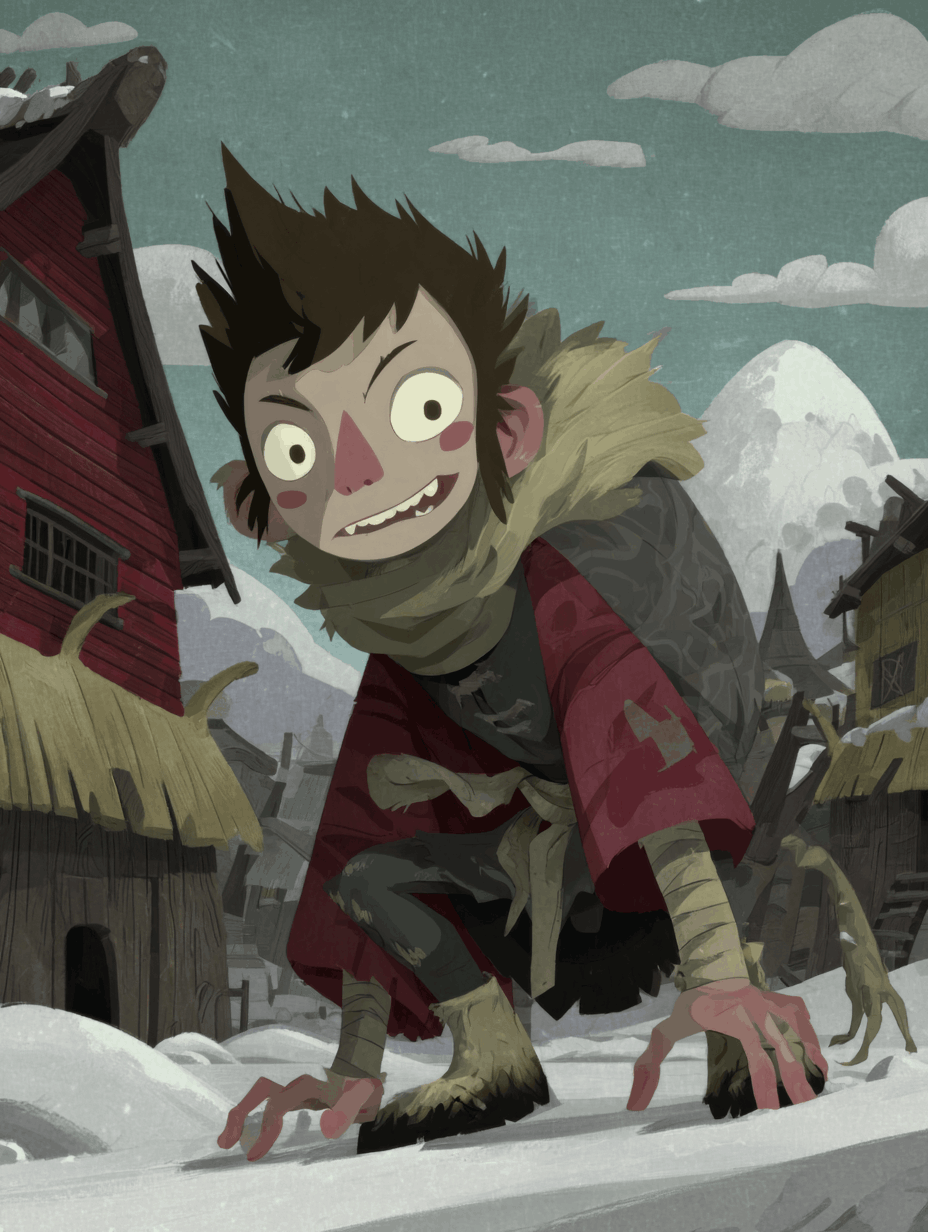
In the fight that follows, Momotaro calls out every attack by the name of one of his three friends, which Kabu mocks as tactically stupid right up until Momotaro tells him why: he learned every one of them from his best friends. On the third strike the water sheets off the demon, and it's Saru standing there, the one who built the weapons and cleaned every battlefield and never once made it into a story the town tells. He asks Momotaro, quietly, if he's really his best friend. Momotaro doesn't have an answer ready, the first time all episode he's been caught without one. Kabu takes the seed without a fight. Saru gives it up ashamed, and both teams go quiet.
Kabocha watches all of it and feels the splinter in her palm stir for the first time since episode two, right as she sees her own shape in Saru: the one doing the unglamorous work, easy to overlook, capable of curdling if it goes unnoticed long enough. She doesn't say anything about it. Kabu leaves Aokusa more certain than ever that the cursed can't come back from what they've become, a belief Saru's willing, unforced surrender should have complicated and doesn't, not yet.
OPEN THE BEAT SHEET ▼
- 1Levee battle opening: the team arrives mid-fight and stops short at the sight of a boy with a peach for a head. Momotaro leaps between rice fields with a kusarigama, dodging a massive rice demon's slashes. He winds up for what looks like the killing blow, then throws the scythe into the ground instead, yanking down a board that holds back the levee water. The paddy empties, the demon gets shoved back by the flood, and in the chaos it slips into a neighboring levee and vanishes under the surface. The crops were the weapon. The demon got away.
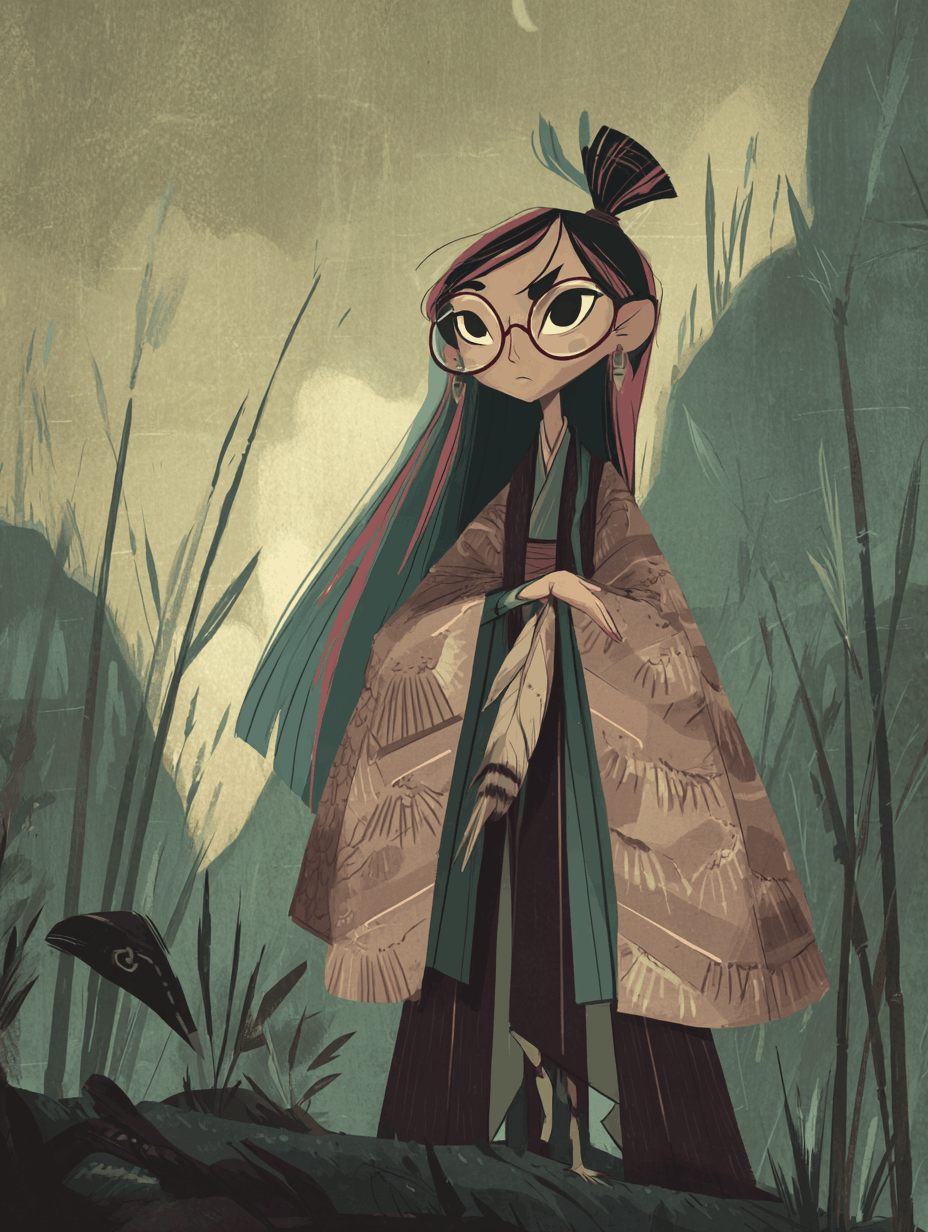
- 2Momotaro's three companions swarm him: the monkey-patterned one wipes down his chain-scythe, the bird-patterned one straightens her glasses and suggests a better trajectory for next time, the dog-patterned one runs off to tell the townspeople what a great job was done. Up close, the team clocks it: a peach where a turnip should be, the same kind of curse Kabu's been carrying since episode one. The team ribs him for it, 'he's like a better version of you,' and Kabu insists, unconvincingly, that he isn't bothered.
- 3TURNING POINT — The ideology rift opens: Kabu tells Momotaro he let the demon escape. Momotaro, calm: 'I wasn't trying to hurt it. Just protect the town.' The townspeople aren't even afraid of the demon. They go about their day, fully confident in their hero. Kabu proposes they team up and take it down next time. Momotaro declines: if they really want to help, they should help the townspeople.
- 4Goose-chase montage: Kabu takes the advice literally and starts interviewing townsfolk for intel on where the demon will strike next. It doesn't work. The team is always a step behind, and Momotaro's crew always gets there first. When they ask Momotaro how he keeps finding it, he tells them to just be more helpful and things will reveal themselves. So they try it his way: errands all over town, small tasks for strangers, still arriving late to every attack. Song: 'What It Takes to Be a Hero' plays through this, upbeat, both teams arguing their definitions of heroism underneath it.
- 5TURNING POINT — Third attack, real damage: the demon strikes again, and this time Momotaro's team can't contain it. Half a hillside of rice fields goes down. The cost of the 'protect, don't fight' approach is finally visible on the landscape.
- 6TURNING POINT — Kabu's core belief, voiced in anger: he confronts Momotaro: your way isn't working, you have to actually fight it. The argument escalates and Kabu says it plainly: 'Demons should be killed.' Momotaro asks, 'Have you ever killed one?' Kabu: 'No. But I would.' It confirms his absolutism for the audience, and it does nothing to move Momotaro, who commits to a plan to trap the demon in a levee even knowing it'll cost the rest of the crop.
- 7TURNING POINT — Vulnerability breaks through: Kabu drops the competition. Sheepishly, he tells Momotaro he shouldn't sacrifice the town's crops, because doing it will hurt them long after the demon's gone. He knows, because it's what he did to his own town, and it's why he left to find a cure. The honesty lands where the tactics didn't. Momotaro sees hero potential in Kabu for the first time and agrees to fight alongside the team.
- 8Final battle, named attacks: Kabu turns to his friends and mutters that at least he's the better fighter. Momotaro overhears. 'Just because I haven't been fighting it doesn't mean I can't,' he says, and proceeds to be a spectacular anime-style fighter, leaping in with the chain-scythe and calling out each attack by the name of one of his companions. Kabu heckles him: 'Why call out your moves? It'll predict you.' Momotaro, mid-strike: 'Because I learned them from my best friends.'
- 9CRISIS — Saru revealed: on the third blow the water sheets off the rice demon and it's Saru standing there: the monkey companion, the weapons-crafter, the one sent all over town to clean up after Momotaro's fights. He's holding a small seed. He looks at Momotaro and asks: 'Am I really your best friend?' Momotaro doesn't have an answer ready, the first time all episode he's been caught without one. Kabu harvests the seed without a fight; Saru surrenders it, ashamed. Both teams are left sobered.
- 10TURNING POINT — Kabocha's quiet horror: watching the mirror team, Kabocha sees herself in Saru: the one doing the work in the background, the dark thoughts building where no one's looking. The splinter in her palm, quiet since episode two, picks this moment to remind her it's still there. She says nothing.
- 11TURNING POINT — Closing thematic beat: Kabu's belief that the cursed can't be redeemed is now fully on record for the audience. Saru's willing surrender, no violence required, quietly contradicts it. Kabu isn't ready to hear that yet.
SUPPORTING CASTMomotaro · Saru · Inuaki · Yuzuri▼
ART DIRECTION — Terraced rice paddies at golden-hour. Momotaro stands at the top of the levee, heroically lit, cape catching the wind. Kabu is at the bottom, mud on his face, ankle-deep in the paddy. In the far background, Saru sits alone on a stone wall, watching Momotaro's silhouette.
Okayama calls itself the birthplace of Momotaro, the Peach Boy. Statues of him stand outside the train station. Kibidango, the millet dumplings he supposedly handed his companions, are sold as the regional sweet. The whole prefecture runs on the association.
Here's the catch: the connection was mostly invented. The claim that Momotaro came from Okayama traces to a 1930 book by an amateur historian who linked the folktale to a local shrine legend. Before that, Okayama was, at best, the third-ranked contender for the hero's hometown, behind two other regions. Scholars have never accepted the Okayama origin as fact. The kibidango detail is shaky too: older versions of the tale don't mention millet dumplings at all, and the famous 'Japan's number one' brag attached to them showed up decades after the story was already circulating. Okayama built a tourism identity on a hero it adopted and then claimed it had raised.
The legend itself is simple enough that nobody questions the shape of it. A boy born from a peach goes to fight demons on a distant island. On the way he recruits a dog, a monkey, and a pheasant, each one signing on for a share of his dumplings, each one bringing a skill to the fight. They win. He comes home a hero. The companions are in every retelling, and not one of the retellings is named after them.