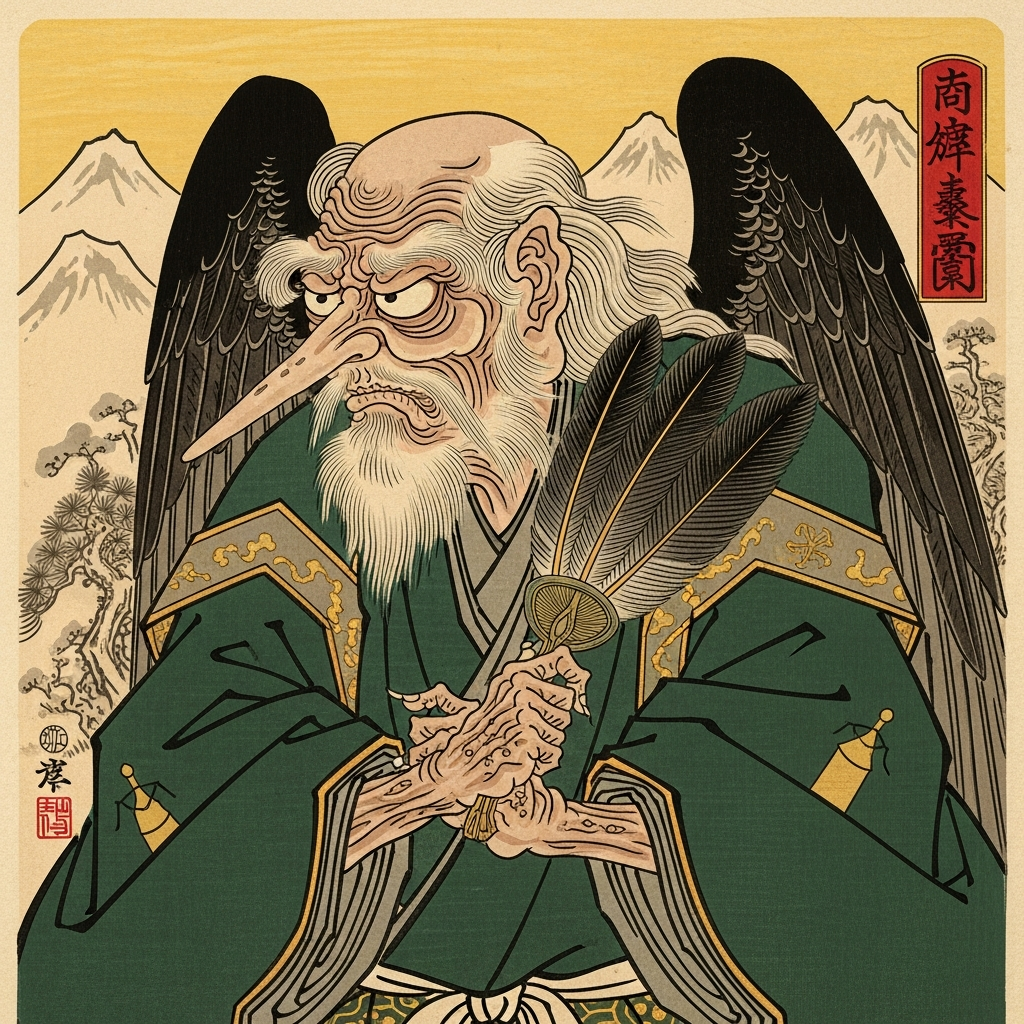
Madarao
A god who has kept the balance so long he's forgotten what he was protecting.
What they want
To protect the balance. It has been his purpose for so many centuries that he no longer thinks of it as wanting anything. When the balance starts to tip, the one move a neutral power has left is to find a worthy successor and lose to him on purpose.
What they need
To trust someone. He does, exactly once, at the end. It's the bravest thing he's done in centuries, and it may also be a mistake.
Voice
Talks like someone who stopped needing to be believed a long time ago. The fight is the least important part of his only episode, and he knows it before anyone else does.
The arc
For eleven episodes Madarao is a destination. He's the peak the Crow Witch ferries souls to and the name the whole season climbs toward. He was a mortal hero once, long enough ago that no one remembers it, and whatever he won made him the Tengu of his own mountain, one of a hundred that keep the balance of the world. He has kept it ever since. The tribute economy that powers the season is his ledger, and somewhere in the centuries the keeping replaced the thing being kept.
Then the team reaches the summit in episode twelve and finds a shriveled old man who looks like a strong wind would finish him. The fight goes badly for the heroes, right up until it stops being a fight. Madarao looks at the boy in front of him, a mortal hero with a scythe and a worldview about to break, and decides this is his time. They talk. He accepts the final blow willingly, trusting the balance to the people who came to end him. It's the first act of trust he's managed in centuries, and the episode never explains it: how much he knew, what he saw in Kabu, whether he understood what was waiting at the bottom of his mountain. Kabu strikes the blow and feels no victory in it. The old god falls, the balance goes loose, and the person who benefits most is already asking for the good news.
Relationships
Crow Witch
She challenged him once and he broke her, then put her to work. Centuries of tribute have followed. Whether he thinks about her at all is a fair question; the mountain does not keep track of its couriers. His fall is the thing she has wanted for centuries, and it arrives by someone else's hand, which is its own kind of insult.
Kabu
The first mortal to reach his summit in a very long time, and a mirror at the wrong angle: a boy who believes demons should be killed, facing what heroes eventually become. Madarao sees something in him worth trusting with the balance and doesn't explain what. The blow Kabu lands ends the season's villain and breaks Kabu's worldview in the same stroke, and it's possible both were the point.
Kinoko
They share no scene and don't need to. Kinoko sought what the Tengu have and was cursed for it; Madarao's death is the harvest of a plan centuries long, executed entirely through other hands. The mountain god spends his last day making the most honest decision of his long life, and it's exactly the decision the mushroom at the bottom of the mountain was farming for.
Episodes Featuring Madarao
2 episodes across the season